Mobile Wallet OS supports multiple last-mile endpoints — ATMs, agent networks, messaging flows, and POS terminals. Each one consumes the OS via the same REST APIs. They are interchangeable and independently configurable per market.
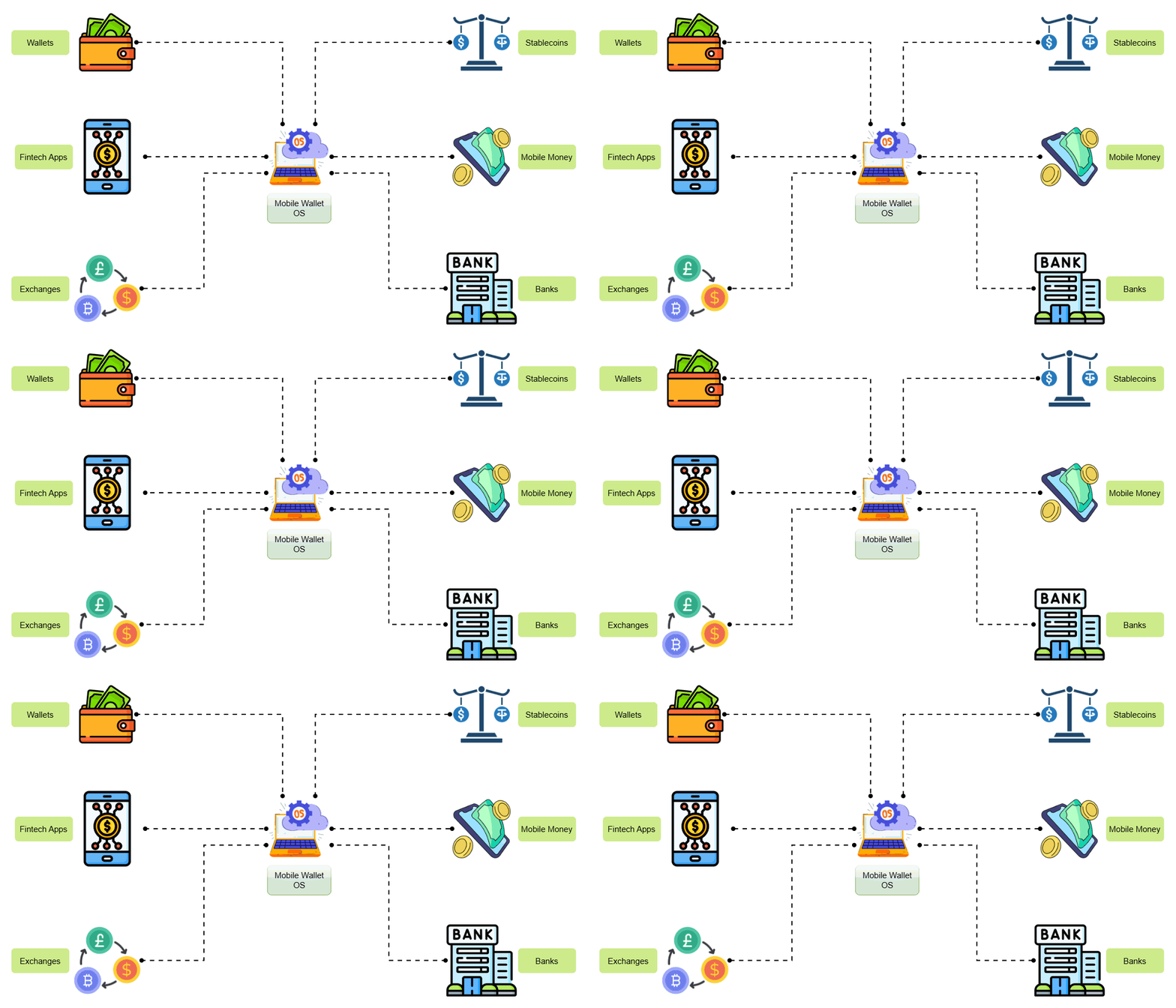
Three principles that make endpoints interchangeable and future-proof.
ATMs, agents, and messaging interfaces all consume the same REST API. The endpoint_type field routes behavior — no separate integration needed.
Enable or disable endpoint types per market in the Operator Dashboard. Run ATMs in Cameroon, agents in Kenya, messaging in Ghana — all from the same platform.
Physical endpoints generate ground-truth data that feeds back into platform abstractions. Edge cases discovered on the ground become product features.
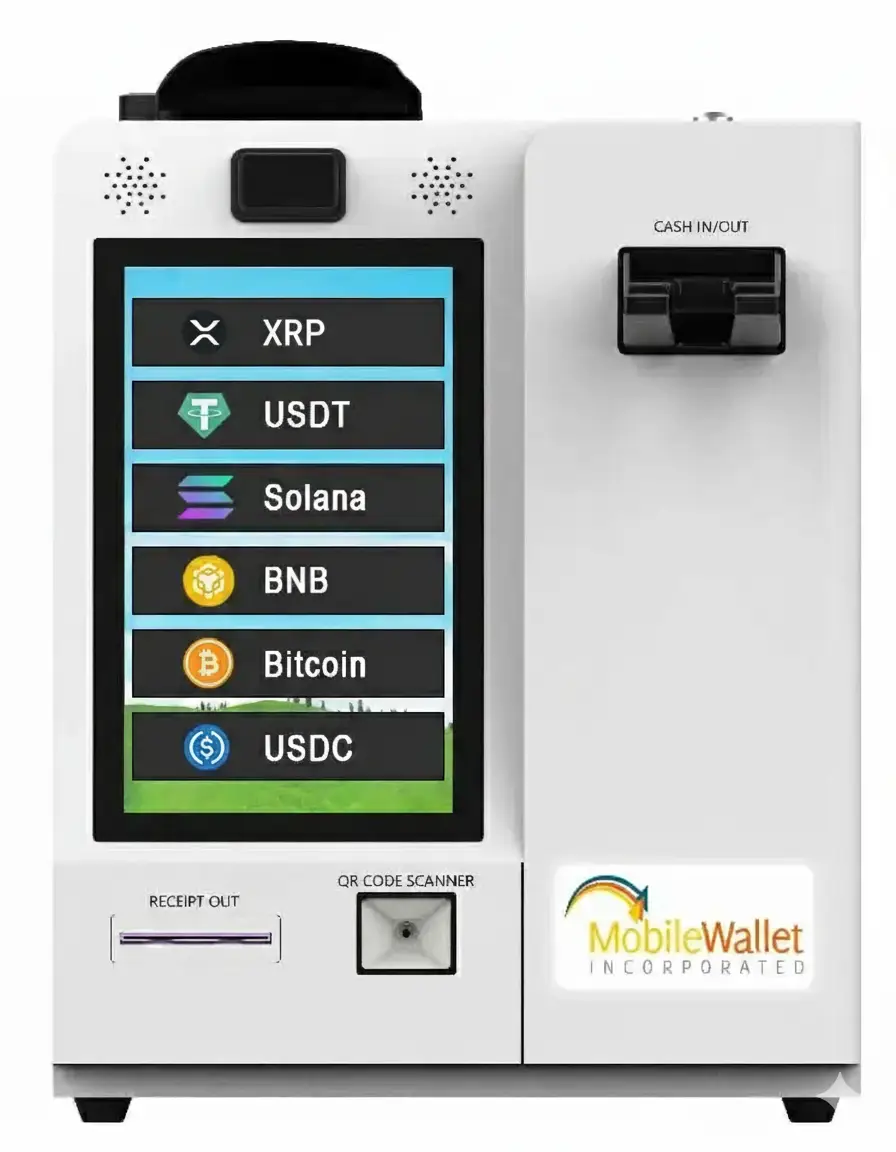
ATMs
Endpoint Type
Networked cash terminals that support both deposits and withdrawals. ATMs consume Mobile Wallet OS as a service — they authenticate users, initiate transactions via API, and receive settlement confirmations over webhooks.
ATMs run the same integration code as any other endpoint. The OS handles compliance, liquidity, and rail selection automatically.
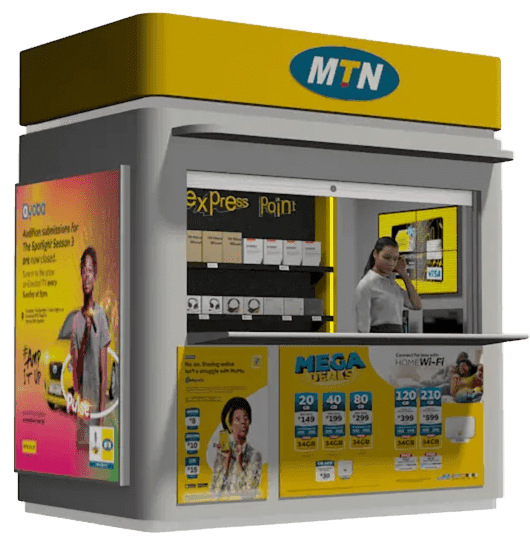
Agent Networks
Endpoint Type
Field agents — retail shops, kiosks, mobile operators — who handle cash transactions on behalf of end users. Agents interact via a lightweight mobile or web interface that calls the same OS APIs as any other endpoint.
Float management, commission tracking, and audit trails are handled automatically by the OS Liquidity Router and Compliance Engine.

Messaging & POS
Endpoint Type
WhatsApp-based flows, USSD sessions, and point-of-sale terminals that let users transact without a dedicated app. These interfaces wrap the OS API behind conversational or hardware-driven UIs.
Perfect for feature-phone users, merchant locations, and markets where WhatsApp is the primary digital channel.
Endpoint availability is managed through the Operator Dashboard — no redeployment required. Activate ATMs in Cameroon, agents in Kenya, and messaging in Ghana from a single interface.


The same REST API that powers fintech integrations also drives ATMs, agent interfaces, and messaging flows. Add a new endpoint type by changing a single field — not rewriting your integration.
1// Initialize the client
2import { MobileWalletClient } from '@mobilewallet/sdk';
3
4const client = new MobileWalletClient({
5  apiKey: 'YOUR_API_KEY',
6  environment: 'sandbox' // or 'production'
7});
8
9// Create a transfer
10const transfer = await client.transfers.create({
11  amount: 50000,
12  currency: 'XAF',
13  destination_rail: 'mtn_momo',
14  destination_market: 'CM',
15  recipient: {
16    type: 'mobile_money',
17    phone: '+237612345678',
18    provider: 'mtn'
19  },
20  reference: 'txn_abc123'
21});
22
23// Poll for status
24const { status, settled_at } = await transfer.poll();
Real-world
Validation from every endpoint

Physical endpoints aren't just output channels — they're validation infrastructure. Every real-world ATM or agent transaction generates data that informs the software abstractions in Mobile Wallet OS. Edge cases discovered on the ground become platform features.
FAQ
Everything you need to know about deploying and managing last-mile interfaces.
We help you launch in your first market.
Do I need different APIs for different endpoints?
No. All endpoints consume the same REST API. The endpoint_type field tells the OS how to route the transaction — whether it's coming from an ATM, agent interface, POS terminal, or messaging flow.
How do I enable endpoints in new markets?
Endpoint availability is configured per market in the Operator Dashboard. Flip a switch to activate ATMs in Cameroon or agents in Kenya — no code change required.
What happens when an endpoint is offline?
The OS queues transactions and retries automatically. You receive webhooks for every state change. For physical endpoints, the interface displays appropriate offline messaging.
Can I run multiple endpoint types in one market?
Yes. Markets can support any combination of ATMs, agents, POS, and messaging. Each endpoint type is independently configurable.
How do endpoints handle compliance?
The OS handles all compliance per market — KYC tiers, transaction limits, AML screening. Endpoints just collect and forward user data; the OS determines if transactions are allowed.